Cloud & DevOps Enterprise Transformation
Our IoT platform transforms industrial operations by monitoring 8,000+ assets across 15 facilities. Integrating real-time sensor data, this predictive system eliminated unplanned downtime, driving a 72% reduction in outages and a 38% decrease in maintenance costs through operational efficiency.



Problem Statement
Teams lack a streamlined portal to provision infrastructure, check service availability, manage code deployments, and receive instant feedback, decreasing overall engineering velocity
Goals
Automate cloud provisioning and platform coordination.
Personalize communication with instant alerts and deployment updates.
Integrate CI/CD pipelines and administrative tools
Enhance efficiency by DevOps hyper-automation workflows.

Product Overview
The Enterprise Migration & Delivery Platform is a unified system for telecoms, providing tools required to migrate workloads and optimize developer agility. Users can process GitOps workflows, monitor observability, and access insights. The system offers automated provisioning and compliance audits for a secure experience including 24/7 availability and observability.
With real-time scaling, adaptive orchestration, and integration options for engineering teams, the platform ensures every deployment is safe and frictionless. Whether it’s managing container clusters, navigating regulatory audits, or enjoying a seamless developer experience, this platform is built to maximize system uptime and revenue for all institutions.
Responsibility

Tools




Design Process
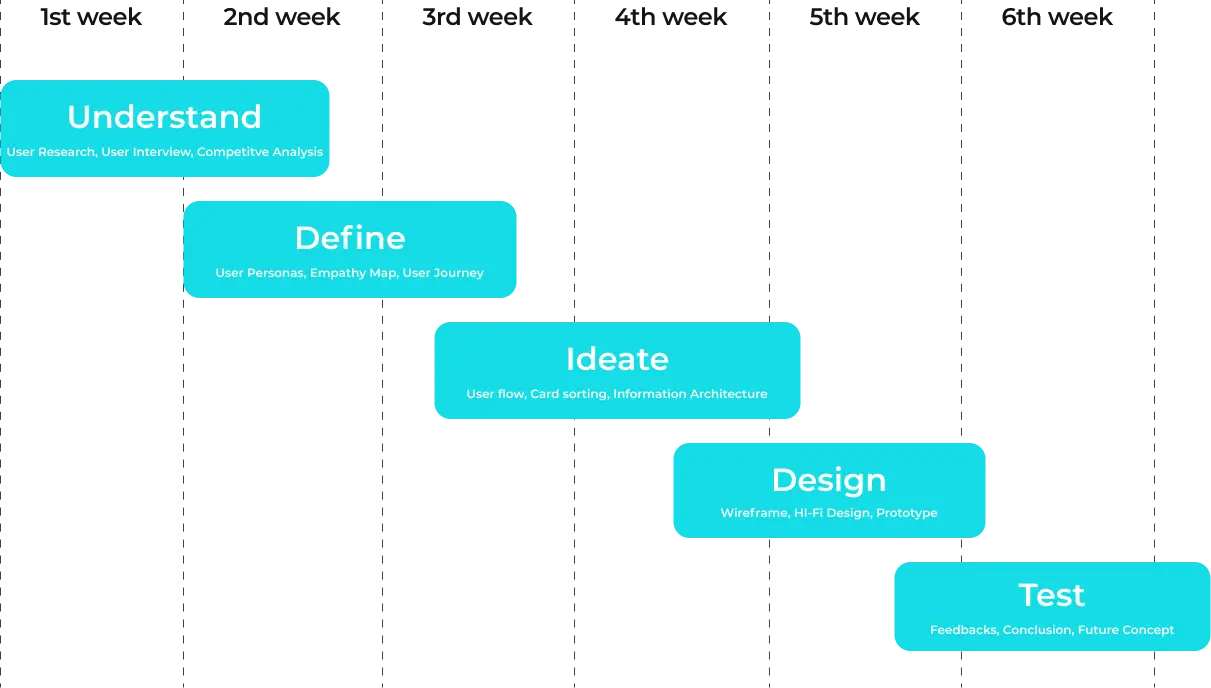
The design process follows a structured approach: Understand user needs, define key features, ideate solutions, design the interface, and test for usability and performance. This ensures a user-centered, functional, and engaging app experience.

Understand
User Research
User Interview
Competitive Analysis

Define
User Personas
Empathy Map
User Journey

Ideate
Information Architecture

Design
Wireframe
Hi-FI Design
Prototype

Test
Feedbacks
Conclusion
Future Concept
Design Timeline
Target Audience
Global telecommunications providers and software service users across multiple geographic regions (150M+ subscribers).
Development teams and platform engineers seeking real-time infrastructure provisioning and continuous delivery intelligence.
High-growth business units interested in microservices architecture, automated rollouts, and multi-cloud scalability.
Executive stakeholders (CTOs, CISOs, CFOs) looking for automated cloud governance and AI-driven operational efficiency.





User Research
User research involved audits and interviews with development teams and ops staff, revealing a need for a streamlined platform. Users prioritized access to instant provisioning, cloud availability, and deployment reminders. Automated features and 24/7 availability were key desires for enhancing engineering efficiency and support
Competitive Analysis
Current cloud delivery tools lack a comprehensive platform integrating hyper-automation, real-time syncing, and personalized assistance. Competitors offer limited automation features, missing the opportunity for instant self-service provisioning, tailored infrastructure alerts, and a seamless developer experience.
Service Name
On Premises Data Centers
Legacy Virtualization
Basic Cloud Portal
Enterprise Delivery Platform
Service Info
Legacy control systems.
Manual telephone scheduling.
Fragmented cloud silos.
Unified DevOps automation hub.
Prediction

Syncing

Alerts
Management
AI Assistant
Factory Info
Automation
Key Features
AI-powered platform provides 24/7 instant deployment support and personalized developer guidance.
Direct infrastructure syncing increases operational speed with real-time slots and instant confirmations.
Allows teams to access deployment instructions and seamless updates on infrastructure status.
Hyper-automation unlocks administrative savings and operational updates, reducing manual tasks by 70%.
Quantitative Research
The Enterprise Migration & Continuous Delivery project aims to provide a seamless and personalized experience for developers and platform operators. Our quantitative research involved understanding user needs and preferences through audits and data analysis, focusing on functionalities like self-service provisioning, CI/CD automation, observability, and cost efficiency.
Screeners
Developers actively seeking a centralized self-service interface for infrastructure-related activities.
- Engineers interested in managing deployment pipelines and subscribing for real-time system alerts.
- Users looking for standardized cloud architecture templates and multi-cloud availability.
- Specialists who value instant infrastructure response times and personalized technical support.
- Staff aged 20-60 regularly engaging with modern engineering platforms like GitHub and Slack.
Key Performance (Baseline vs. Target)
8-12 Weeks to <1 Day
Infrastructure Provisioning Time: Time from initial request to a ready-to-deploy environment reduced via self-service.
3-4 Months to <4 Hours
Lead Time for Changes: Drastic reduction in the time required for code to move from commit to production.
70% to 15%
Toil Reduction: Percentage of team time spent on routine manual tasks like patching and backups versus strategic work.
Quarterly to Daily
Deployment Frequency: Shifted from large batch quarterly releases to a daily production deployment cadence.
16+ Hours to <15 Mins
Mean Time to Recovery (MTTR): Time from incident detection to resolution through automated detection and rollback.
35-40% Savings
Cloud Cost Optimization: Reduction in total infrastructure spend through rightsizing, autoscaling, and FinOps.
1. Infrastructure & Operational Silos
Telecom institutions currently rely on legacy systems operating in silos for environment provisioning and workload management. This fragmented access to information creates blind spots, friction, and significant deployment leakage across business lines.
2. Lack of Automated Intelligence
Existing manual-based models do not provide adaptive intelligence based on evolving patterns or specific deployment types. Critical updates or alerts are often generic, leading to high mean-time-to-recovery and failing to address individual infrastructure signals.
3. Absence of Governance Clarity
There is a lack of structured digital tools that ensure explainability for infrastructure security or compliance audits. Stakeholders want clearer advantages from automation, such as transparent policy interpretability, 24/7 system monitoring, and real-time ROI.

User Persona: Marcus Chen

Name:
Marcus Chen
Age:
42
EDUCATION:
Senior Cloud Architect
Job:
Lead Platform Engineer
Location:
Seattle, USA
HOBBIES:
Reviewing system breakthroughs, family time, travel
Bio
Marcus is a lead engineer and an essential member of the DevOps staff who is committed to his technical practice. He manages rotating shifts across various departments and cloud facilities, necessitating that he stay informed regarding cloud regulations, protocols, and deployment schedule updates.
Personality
Responsible
Committed
Detail-oriented
Safety-focused
Pain Points
Difficulty staying updated with constant changes to deployment shifts and cloud regulations.
Struggles to access unified system information across different cloud operators.
Desires more direct, transparent, and faster communication from platform administration.
Goal
Maintain real-time awareness of technical agreements and professional cloud rights.
Improve time management through enhanced scheduling transparency and AI-driven clarity.
Rely on robust platform automation for scheduling representation and system protection.
User Persona: Sarah Jenkins

Name:
Sarah Jenkins
Age:
48
EDUCATION:
Advanced Systems Management
Job:
Cloud Operations Director
Location:
London, UK
HOBBIES:
Reading technical journals, hiking with family, volunteering
Bio
Sarah is an experienced cloud director and a coordinator who is committed to her facility. She manages complex scheduling across different departments and units, requiring her to stay informed about resource availability, environment regulations, and operational updates.
Personality
Organized
Efficient
Service-oriented
Tech-savvy
Pain Points
Difficulty staying updated with manual release changes and staff availability.
Struggles to access unified system information across different cloud operators.
Struggles to access consolidated system information across different technical units.
Goal
Stay informed about scheduling shifts and professional system management.
Improve administrative balance through better hyper-automation clarity.
Rely on strong AI support for seamless delivery and system protection.
User Journey Map
Persona: Carlos Martínez (Senior Risk Operations Manager)
Actions
Action 1
Action 2
Action 3
Action 4
Task List
Review daily deployment schedule
Track urgent infra provisions
Access technical protocol updates
Subscribe to system shift reminders
Feeling
Hopeful to optimize workflow
Satisfied with live updates
Happy about data accessibility
Relieved to manage cloud hours
Thoughts
Can I sync my deployments across regions?
It’s great to see live provisioning updates
This automation is perfect for system accuracy!
The AI should help me stay focused on code
Improvement Opportunities
Offer automated template bundles Promote digital IaC packages.
Provide resource filter for environments.Personalize tech flows for staff.
More integrations for telemetry data.Introduce technical resource packs.
Simplify automated management.Enhance platform loyalty benefits.
Actions : Action 1
Task List
Review daily asset schedule
Feeling
Hopeful to optimize workflow
Thoughts
Can I sync my shifts across departments?
Improvement Opportunities
Offer automated shift bundles Promote digital packages
Actions : Action 2
Task List
Track urgent repair bookings
Feeling
Satisfied with live updates
Thoughts
It’s great to see live machine queue updates.
Improvement Opportunities
Provide an asset filter for schedules Personalize plant flows for staff
Actions : Action 3
Task List
Access factory protocol updates
Feeling
Happy about data accessibility
Thoughts
This automation is perfect for sensor accuracy!
Improvement Opportunities
More integrations for factory data Introduce technical resource packs
Actions : Action 4
Task List
Subscribe to shift reminders
Feeling
Relieved to manage plant hours
Thoughts
The AI should help me stay focused on maintenance.
Improvement Opportunities
Simplify automated management Enhance factory loyalty benefits
User Journey Map
Persona: Sarah Jenkins (Cloud Operations Director)
Actions
Action 1
Action 2
Action 3
Action 4
Task List
Review engineer rollout schedules
Track real-time cluster updates
Access workload compliance records
Subscribe to AI system alerts
Feeling
Hopeful to organize clusters
Satisfied with system updates
Happy about data accuracy
Relieved to manage technical content
Thoughts
Can I sync rollouts for the whole team?
It’s great to keep everyone updated
This automation will be perfect for my staff!
The AI should help me stay organized
Improvement Opportunities
Offer automated rollout bundlesPromote digital cloud packages.
Provide a cluster filter for environments.Personalize rollout schedules for staff
More integrations for technical items.Introduce technical resource packs.
Simplify automated management.Enhance system loyalty benefits.
Actions : Action 1
Task List
Review technician shift schedules
Feeling
Hopeful to organize facilities
Thoughts
Can I sync shifts for the whole team?
Improvement Opportunities
Offer automated shift bundles Promote digital packages
Actions : Action 2
Task List
Track real-time asset updates
Feeling
Satisfied with system updates
Thoughts
It’s great to keep everyone updated.
Improvement Opportunities
Provide a unit filter for schedules Personalize shift schedules for staff
Actions : Action 3
Task List
Access unit repair records
Feeling
Happy about data accuracy
Thoughts
This automation will be perfect for my staff!
Improvement Opportunities
More integrations for industrial items Introduce industrial resource packs
Actions : Action 4
Task List
Subscribe to AI health alerts
Feeling
Relieved to manage technical content.
Thoughts
The AI should help me stay organized.
Improvement Opportunities
Simplify automated management Enhance plant loyalty benefits
Key Takeaways
The Enterprise Migration & Delivery Platform is engineered to centralize telecom operations by offering real-time scaling, resource management, and uptime prediction within one ecosystem. Our research highlights the necessity for integrated intelligence, addressing the frustrations teams face with current manual-based solutions. Features like the container orchestration, GitOps workflows, and MLOps add value to the business journey.
Results revealed 120x recovery time reduction, while a 75x increase was achieved for deployment frequency and personalized system updates. The platform caters to diverse personas—platform engineers, operations leads, and executive stakeholders—ensuring compliance and engagement. This project redefines how telecom institutions connect with their high-value subscribers, enhancing both security and loyalty.